I will be hosting a screening of Vincent Moon and Efterklang’s film AN ISLAND as soon as the film is finished (probably beginning of February). Please contact me at moltke+gmail+com if you’re interested in joining, and I will email you time and location if there’s room. It’s a private screening. You can organise your own here: anisland.cc
I’m really happy for Matthieu and Efterklang – there’s something magical and generous about this project. I watched a longer excerpt in November and thought it was some of the best I’ve seen from Matthieu’s hand
Open data is a vital, raw material for the open web. So is language and the fact that you, as a user, have the choice to participate in the web in your own language. Think of it like this: You might get your great code or free culture project out there. But how are you going to gain users or contributors in far-off countries who don’t necessarily speak your language, if you can’t pay for professional translation services or access to proprietary, “professional” tools? Free and open language tools and higher quality language data are key for localization, and for the health of the open web. Firefox, for example, has been translated by community members into more languages than I even knew existed, an effort characterized by a high degree of precision, and with distinct human touch.
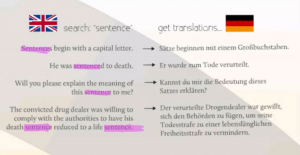
Tatoeba focuses on example sentences, not word-by-word translation
This is one of the many reasons why a projects like Tatoeba both helpful and needed from an open web perspective, and why the Mozilla Foundation wants to encourage and help the Tatoeba project by giving it a USD 2.5K Mozilla Drumbeat Grant. We hope to be able to help more in the future and to see the translation communities working closer together.
What is Tatoeba?
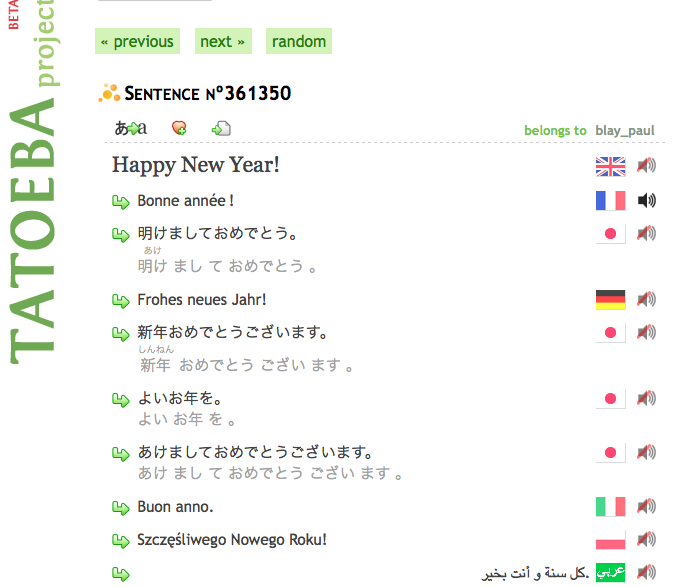
At the core, Tatoeba is large, free and open database of example sentences translated into several languages:
une énorme base de données de phrases traduites dans plusieurs langues .. eine große Datenbank von Beispielsätzen, die in verschiedene Sprachen übersetzt sind ..
Sentences are added and maintained collaboratively by the users. There are presently 675 000 sentences in 80+ languages with the recent addition of Klingon(!), Thai and Slovenian. In July 2010 there were ~400,000 sentences in ~50 languages, and the database is growing exponentially. Interestingly, Esperanto has shown the fastest growth rate lately – in July there were only 1000 sentences; now there are +35,000. See more impressive statistics from the Tatoeba team.
Trang Ho presenting Tatoeba at the Drumbeat Paris event:
Why does the world need a free and open database of sentences? [updated]
There are more answers than I can provide here, and I encourage you to post them in the comments, as Alan Simon from Tatoeba has done – see comments
– it’s easier for amateurs to translate sentences rather than words, and thus makes building a database accessible for more people. (Alan Simon)
– Sentences are “ready-to-use” data, as opposed to single word (Alan Simon, see below)
- being free and open, the Tatoeba lends itself to building other tools (Alan Simon).
– It helps endangered languages by giving more people access to a quality learning tool, and by connecting hobbyists and rare language geeks (Alan Simon).
- Example sentences are extremely useful for learning-by-using the web. Institutions are only starting to realize the value of this new form of learning – how many kids today have not, for example, taught themselves the basics of Japanese from Manga (and indeed, Tatoeba means “for example” in Japanese).
- Tatoeba can be used for fixing and checking automated translation – including software documentation.
–- A free and open database of example sentences is helpful for localizing software and services such as Wikipedia, Creative Commons, or the Mozilla Project. It’s an important building block for the open web.
–- It offers interesting opportunities in collaboation with other free and open language projects such as the Shtooka Project which provides free audio sentences from native speakers, integrated into Tatoeba. Extremely promising too.
–- Personally, I will use Tatoeba in the future because word-by-word translation – which is offered by a myriad of services – just doesn’t cut it on its own. If, for example, you’ve translated to languages you have very little or no knowledge of, example sentences are extremely helpful to prevent the kinds of mistakes that even the best automated services make because they provide context. If like me you enjoy using Google Translate, you also know it can only do so much..
In conclusion:
Tatoeba has shown great talent and initiative within the Drumbeat Community – in spite of the Drumbeat platform’s shortcomings at an early stage – and deserves this recognition for a heroic effort in providing the raw fuel for the future language applications.You can read more about the project and become a contributor at http://tatoeba.org/ or join Tatoeba on Drumbeat. I also strongly encoure you to correct or improve my blogpost and provide more good reasons for supporting Tatoeba than I’ve provided here. Finally, if you have a spare moment, go translate Trang’s excellent “speedgeek” using universal subtitles on the above video. Merci!
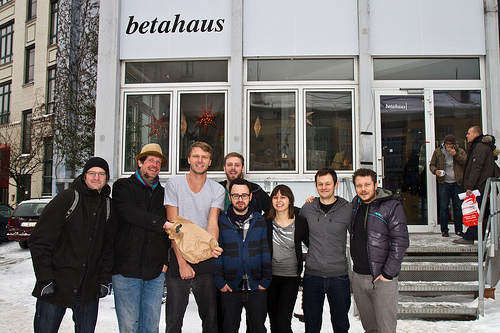
Today, the Berlin chapter of the Awesome Foundation was proud to announce the first grand winner. Many applicants were present this morning at Betahaus when we had the honor to hand over a brown paper bag filled with 1000 EUR to Konrad who convinced with his awesome idea: a “Wilde Schlittenfahrt”, a wild downhill sledge ride.
Konrad (seen above with a hat and one hand on the money bag) will build a sleigh track with different lanes to enjoy winter and the snow. It will be maintained, so it lasts a while. He already has some locations in mind and is eager to realize his snowride soon. In this video, Konrad explains his idea with his own words:
We liked the idea because it spreads love and fun during a very hard, dark and cold time in Berlin: winter. It will bring people together and create a friendly environment. It is realizable soon and within the budget. Plus: We all look forward to riding that hill ourselves, awesome!
Thanks to everybody who submitted their ideas, we were amazed by the variety and number (more than 40) applications! It was really hard to decide, great fun took us a whole Friday night and we look forward to the next pack of applications, If you think you’ve got an Awesome idea then get your submissions in now!
So, I won an award in my home country, Denmark. Truth be said, I sometimes jokingly refer to this event to as Old Media Days. Because it caters mainly to media professionals from the established industry, has a steep participation fee (6500 DKK – roughly 1300 USD) and because it has been fairly conservative until Didde Elnif took over leadership. I accepted for two reasons: I really wanted and needed this recognition because it has honestly not always been easy promoting openness in Denmark. Secondly because it shows an interest to promote changes in the direction of sharing and open innovation. Or maybe I am just getting old Of course, it was a chance for me to raise the issue that new and social media are – really – just the internet: The established media need to assume responsibility towards keeping this shared infrastructure open and free for all innovators – professionals and individuals, center and periphery, alike. And this does not run against running a business. On the contrary.
This year’s recipient is a truly passionate advocate of new media development, particularly towards a more open and free internet.
Henrik Moltke receives the New Media Days Award 2010 because he’s a dedicated commentator, who insists on confronting the media business in a critical and intelligent fashion.
His journalism has often focused on technology and progress. The past years he’s been focused on establishing an informed debate about the changes in copyright law following the latest development in media and distribution channels. First and foremost through his great dedication as spokesperson and co-founder of Creative Commons in Denmark, but also as director of the documentary ‘Good Copy – Bad Copy’.
Message from Evan Roth:- I’m in BCN trying to sort out logistics etc
GML in Barcelona…
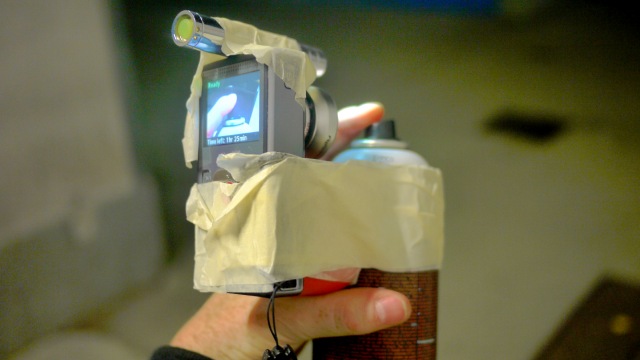
I’m headed to Barcelona on Wednesday for the Mozilla Drumbeat Festival. I’m going to be running some formal (and some informal) sessions surrounding Graffiti Markup Language. Hackers can find me on Thursday (Nov. 4th) at 11:30am in Monochrom’s hackerspace bus, which should be parked in the MACBA courtyard. I will also be running an informal / un-official session for local graffiti writers interested in either: 1) having their tags motion captured into .gml (like this), or 2) experimenting with mini bombing sessions using Spray Can POV cams. Send me an email if you’re interested and I can give you the details – info[at]evan-roth[dot]com
Legendary LA graffiti writer, publisher and activist, named TEMPTONE. Tempt1 was diagnosed with ALS in 2003, a disease which has left him almost completely physically paralyzed… except for his eyes. An international team (Members of Free Art and Technology (FAT), OpenFrameworks, the Graffiti Research Lab, and The Ebeling Group communities) have teamed-up to create a low-cost, open source eye-tracking system that will allow ALS patients to draw using just their eyes. The long-term goal is to create a professional/social network of software developers, hardware hackers, urban projection artists and ALS patients from around the world who are using local materials and open source research to creatively connect and make eye art.
Eyewriter is powered by GML – more about why I <3 GML and why Mozilla supports it here
I pulled Aza Raskin and Atul Varma aside on a busy day in Mountain View and asked: “What are you going to do at Drumbeat Festival“? Shooting from the hip, Atul suggested using Etherpad for teaching/learning HTML. Aza – departing from a Margaret Mead quote:
“Never underestimate the power of a small but committed group of people to change the world. Indeed, it is the only thing that ever has”
- will explore how rapid prototyping and the open web can empower said small groups of committed people.
The Drumbeat Festival will be filled with people like Aza Raskin and Atul Varma– people taking advantage of the fact that the internet gives all of us a million new ways to learn. Anywhere.
Berlin is an amazing place – and more so if you’re an artist, cultural entrepreneur or digital media pioneer. There is a certain “anything is possible” vibe, rent’s cheap, and though Berlin is perpetually broke, people get by and do cool shit. Startups like Soundcloud draw attention to a nascent, cutting edge tech scene. Since long, the free culture / free software scene is strongly represented by Chaos Computer Club, Free Software Foundation, Wikipedia, Creative Commons and others who’ve set up shop here. International events such as re:publica,Transmediale and Chaos Computer Conference bring hackers, bloggers and artists together. Our project – Mozilla Drumbeat – has had an amazing start with no less than three Berlin events so far. Yet, Free Culture is still a relatively unknown phenomenon to the broader cultural community in Berlin. Artists working with new media and computers wonder where to turn for questions like: how can I use free licensing to everyone’s advantage? Can I make money on “free”? Which tools can I use to my advantage? Who else is doing interesting stuff – could we collaborate? There is a huge opportunity here, and now Ela Kagel is offering an easy fix: The Free Culture Incubator. The program was launched during this year’s Transmediale and has developed into a living hub for free culture in Berlin. If you’re in Berlin and interested in this field, this is something you want to participate in and stay updated on. See you there!
From Ela Kagel:
I’m happy to announce the start of a 12-months workshop series on October 23rd! This series of events will be hosted by various partner organizations all over Berlin. The concept: 12 months of workshops, dedicated to freelance creatives and cultural workers, with the aim to exchange knowledge, foster long-term project partnerships and highlight & strengthen the local scenes.
The first Workshop – MAKING WAVES, hosted by Sourcefabric – takes place on OCTOBER 23rd – and aims at
freelance journalists, media artists, creative practitioners, open source enthusiasts and web programmers who are looking to find new ways to organise, distribute and broadcast their media content using open source software.
How will the workshops be structured?
Each host will offer a workshop theme which is related to the daily practice of the respective venue or institution. Rather than being solely theoretic, the workshops strive to be hands-on and results-oriented. In order to broaden the scope of the workshops and refrain from becoming too Berlin-centric, 1-2 international experts will be invited to each workshop.
Who can participate?
Anyone who has a profound interest in the workshop topics is invited to participate. The only two requirements are: a) an online participation application must be completed, and b) this application must include a description of professional practice and motivation for participation. A maximum number of participants will then be selected from the applications. Participation is free of charge, but each participant will be required to assist in the documentation of the workshop.
Documentation
Each workshop will be documented and made freely accessible online. In doing so, our aim is to create a centralised database of topical information, best practice projects, practical advice, as well as a list of institutions and professionals involved in the fields of free culture and the open web. This ever-growing online resource will become the content basis (i.e. ‘toolkit’) for future projects.
This is my first ever upload to Soundcloud, yo!
I was eating lunch with Joi when Max came by and joined. Joi decided to do an interview on his flip camera, and I recorded the audio. Its a good insight into Diaspora and their plans. And I want to learn how to use Soundcloud
Interviewer: Joi Ito
Interviewee: Max Salzberg, Diaspora
Date: September Sat 4th
Location: Arcotel Linz, Austria
Joi will upload video ASAP. I might upload an edited version with 2 cameras
Join Diaspora! http://www.joindiaspora.com/


 Of course, it was a chance for me to raise the issue that new and social media are – really – just the internet: The established media need to assume responsibility towards keeping this shared infrastructure open and free for all innovators – professionals and individuals, center and periphery, alike. And this does not run against running a business. On the contrary.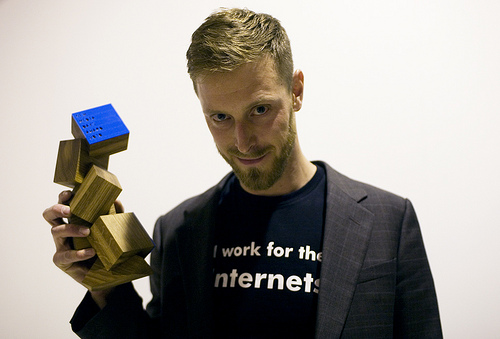





![[FSF Proud Member]](images/henrikfsfbutton_aHR0cD.png)